
Kling AI does not allow NSFW content in 2026, and the ‘glitch era’ that produced occasional NSFW-leaning outputs through prompt tricks in late 2024 is closed. Kuaishou ships moderation updates monthly; the 2026 Sensitive update tightened filters so aggressively that swimwear, dance fitness, fashion editorial, and anatomy reference inputs now hit false-positive blocks. If you actually need NSFW video output, you have to switch tools. Seven alternatives cover the realistic use cases — three open-source and self-hosted, two API-based for production work, one Telegram-native companion-context, and two SFW workhorses for users whose only complaint is Kling’s false-positive rate on legitimate content.
Why Kling Blocks NSFW (And Why the ‘Sensitive’ Update Made It Worse)
Kling AI’s content policy explicitly prohibits NSFW prompts, NSFW reference image uploads, and any output where post-generation frame analysis identifies NSFW-trending visual content. Three independent moderation layers enforce it: a prompt-side classifier that blocks NSFW keywords and coded euphemisms; an input image filter that screens uploaded reference images; and an output check that scores generated frames before delivery. Single-point bypass doesn’t work because each layer is independent.
The 2026 Sensitive update (community-labeled ‘200% sensitive’ after sora2.center documented the pattern) increased false-positive rates across all content categories — not just NSFW. Specific examples reported across Reddit, Twitter, and Kling Discord servers: fully covered one-piece swimwear in beach photos triggers input filter blocks; bikinis are nearly always blocked; dance fitness reference videos get flagged; fashion editorial shots with bare shoulders get rejected; yoga poses and athletic motion reference get caught for ‘exposure’ regardless of context. Prompts that worked in 2025 fail in 2026. The pattern: Kling is becoming less useful for any human-figure work, not only NSFW.
The structural reason this won’t loosen: Kuaishou operates under Chinese content regulation (Cyberspace Administration of China requirements tightening since 2024) while serving global commercial customers (ad agencies, production studios, enterprise SaaS) who demand brand-safe output. Legal precedent from Character.AI (Garcia v. Character.AI filed October 2024 in Florida; multiple Texas lawsuits filed December 2024) signaled to every AI platform that NSFW-adjacent capability creates concrete liability. Expect Kling to add capabilities (longer videos, better motion, integrated audio) but not to loosen content filters. That’s not where the market or regulation is moving.
7 NSFW Video Alternatives at a Glance
The replacement landscape splits into three categories: open-source local models (Wan 2.6, Hunyuan Video), semi-permissive APIs (Pixverse C1, Hailuo MiniMax), and companion-context platforms (HoneyChat). The two SFW workhorses (Pika Labs, RunwayML Gen-3) are included for users whose only Kling complaint is false-positive blocking on legitimate human-figure work.
NSFW-friendly video generation alternatives compared — 2026
| Wan 2.6 | Hunyuan Video | Pixverse C1 | Hailuo MiniMax | HoneyChat | Pika Labs | RunwayML | |
|---|---|---|---|---|---|---|---|
| NSFW capability | Yes (open-source, no filter) | Yes (open-source, partial) | Semi (tier-gated) | Semi (tier-gated) | Yes (Premium+ hot mode) | No (filter) | No (filter) |
| Setup difficulty | High (local install + GPU) | Medium-high | Low (API access) | Low (web UI) | Low (Telegram bot or web) | Low (web UI) | Low (web UI) |
| Cost model | Free + GPU rental | Free + GPU rental | Pay per generation | Pay per generation | Free 20 msg/day or $4.99–39.99/mo | $10–95/mo | $15–95/mo |
| Best for | Power users, max control | Power users, max control | Production workflows | Quick generation | Character-context companion video | Stylized non-NSFW video | Pro non-NSFW work |
| Quality vs Kling | Competitive at top end | Below Kling | Below Kling | Below Kling | Different product (character-anchored) | Below Kling | Above Kling top-end |
| Character consistency | Manual (LoRA training) | Manual (LoRA training) | Per-prompt | Per-prompt | Native (LoRA per character) | Per-prompt | Per-prompt |
| Audio / lip-sync | External tools | External tools | No | Partial | TTS layer (Inworld) | No | Lip-sync available |
1. Wan 2.6 — The Open-Source Recommendation (Alibaba)
Wan 2.6 (the third-generation video model from Alibaba’s research division) is the most-recommended Kling alternative in the open-source community as of 2026. Three factors converged to make it the default community choice: model quality close enough to Kling at the top end, Apache-equivalent licensing that allows commercial use with attribution, and inference cost that runs on consumer hardware.
Practical setup paths: ComfyUI with the Wan 2.6 model checkpoint is the standard install. On a 24GB RTX 4090 or equivalent, full-quality 5-second clips at 720p generate in roughly 90 seconds. On a 16GB card (RTX 4080, 3090, 4070 Ti Super), expect 50–60% longer generation times and occasional quality compromises on detail-heavy scenes. The model weights are 8–14GB depending on which variant you pull from the official release.
Cloud GPU rental is the option for users without sufficient local hardware. RunPod, Vast.ai, and Lambda Labs all rent A100 or H100 instances by the minute. Benchmark: a 5-second 720p clip on a rented A100 runs about $0.04–0.08 depending on instance pricing — that’s competitive with Pixverse’s per-generation pricing while giving you full content control.
The downsides are real. ComfyUI requires Python environment management, model checkpoint downloads, and learning the node-based workflow. Best quality requires prompt-engineering investment — you don’t get Kling’s polished defaults out of the box. Character consistency across multiple clips requires LoRA training (20–40 minutes per character per session). For users who want NSFW video without compromise and have the technical skills (or willingness to learn), Wan 2.6 is the right answer.
2. Hunyuan Video — Tencent’s Power-User Alternative
Tencent’s Hunyuan Video (2026 release) is the consistent runner-up in open-source NSFW alternative recommendations. The architecture (similar 3D causal VAE plus diffusion transformer design as Wan) produces motion quality below Wan 2.6 at the top end but workable across most use cases. The model ships with partial safety constraints baked into training, which means even after disabling the inference-side safety filter, some outputs exhibit residual ‘desaturated’ tendencies that Wan doesn’t share.
Setup is similar to Wan 2.6 — ComfyUI workflow, model checkpoint downloads (Hunyuan weights are slightly smaller, 6–10GB), 16GB+ VRAM requirement, $0.04–0.08 per clip on rented A100. The community workflow templates for ComfyUI cover Hunyuan as well, so existing Wan users can switch with minimal friction.
Why Hunyuan is the second pick, not the first: licensing is more restrictive on commercial NSFW use than Wan’s Apache-equivalent terms, which matters for production-context users. Output quality on detail-heavy scenes (hair, fabric, fluid motion) is below Wan. The community workflow recommendations consistently default to Wan when both are options. Hunyuan is the recommended fallback if you can’t get Wan working in your specific setup, or if you want to compare model outputs side-by-side before committing to one.
3. Pixverse C1 — Production API with Tier-Gated Content
Pixverse’s C1 model (the 2026 update to their original Pixverse video API) offers semi-NSFW content generation via API access with tier-gated content levels. The lowest tier handles SFW prompts; higher tiers (paid subscription) extend to suggestive but non-explicit content. Pixverse positions itself as the production-friendly middle ground between Kling (no NSFW) and Wan (full NSFW with technical setup).
API pricing as of 2026: pay-per-generation at roughly $0.10–0.25 per 5-second 720p clip, with volume discounts for monthly subscribers. The API is well-documented and integrates with standard automation pipelines (Zapier, n8n, custom backends). For production workflows generating dozens of clips per day, the economics work. Content ceiling is lower than Wan 2.6 — Pixverse won’t generate explicit content even at the highest tier — but the API access tier makes integration straightforward.
Best fit: studios and creators running automation pipelines who need predictable per-generation costs and reliable integration, not raw content ceiling. Worst fit: users who want explicit content or who don’t have an automation pipeline to integrate with.
4. Hailuo MiniMax — Quick Web NSFW
MiniMax’s Hailuo video model is the quick-web option in the semi-NSFW category. Web UI access (no API setup required), $0.05–0.15 per 5-second 720p clip, suggestive content levels available, explicit content blocked. The product is positioned for creators who want fast iteration without committing to a workflow tool.
The Hailuo strength: model output handles motion in stylized animation contexts well — anime-coded characters, ghibli-style scene work, stylized fitness reference. The web UI workflow takes seconds per prompt versus the multi-step ComfyUI setup for Wan/Hunyuan. Best for users iterating fast on stylized content where they don’t need explicit NSFW but do want suggestive content without Kling’s false-positive blocks.
The Hailuo weaknesses: content ceiling is lower than Pixverse C1’s higher tiers, and there’s no API for automation pipelines (web UI only as of 2026). If you need either explicit content or production automation, this is the wrong pick. If you want fast iteration on stylized semi-NSFW from a browser, it’s a strong choice.
5. HoneyChat — Character-Context Telegram Video (Lowest Friction)
HoneyChat bundles video generation into a Telegram-native companion app rather than offering it as a standalone prompt-to-video tool. The product positioning is different than Kling: video is character-anchored, meaning you generate clips featuring a specific HoneyChat character (one you’ve selected from the catalog or designed yourself) in a scene you’ve described in chat. Character consistency is the default because each character has a dedicated LoRA trained for that character’s visual identity.
The routing: romantic content (level 0–2: hand-holding, kissing, lingerie) runs through fal.ai’s Pixverse C1 endpoint on the SFW path, available on Free tier (20 messages per day) and Basic tier ($4.99/mo). Hot mode (level 3–4: semi-nude, explicit) runs through WaveSpeed wan-2.2-spicy and requires Premium tier ($9.99/mo) or higher. Elite tier ($39.99/mo) unlocks level 5 (hardcore) with a peripheral-composition framing policy for regional compliance.
HoneyChat video generation — what the tier matrix actually delivers
WaveSpeed wan-2.2-spicy for hot mode (Premium+)
Routes to WaveSpeed's wan-2.2-spicy endpoint, a fine-tuned video model that handles NSFW content levels 3–4 (semi-nude through explicit, per HoneyChat's documented level system). Premium tier ($9.99/mo) unlocks this path; VIP ($19.99) and Elite ($39.99) get higher generation quotas.
fal Pixverse C1 for SFW path (Free + Basic)
The romantic content mode (level 0–2, romantic through soft erotic) routes to fal.ai's Pixverse C1 endpoint. The SFW path is usable on Free tier (20 messages/day) and Basic ($4.99/mo) without any content restriction beyond the soft erotic cap.
Character LoRA for consistency across clips
Each HoneyChat character has a dedicated LoRA trained for that character's visual identity. When you generate video featuring a character, the LoRA gets attached to the generation pipeline so the character looks consistent across multiple clips — not just within one clip. This is the difference from Kling/Wan/Pixverse where character consistency requires manual LoRA training per project.
Documented tier limits — no surprise filter walls
Free and Basic cap at content level 2 (soft erotic — flirtation, lingerie, suggestive scenes). Premium at 3 (semi-nude). VIP at 4 (explicit sex acts). Elite at 5 (hardcore — BDSM, advanced kinks). Each level is published in the documentation — you know what you're paying for before you pay, no mid-scene surprises.
Telegram-native discovery, no email signup
Authenticate via Telegram — HoneyChat sees only your Telegram user ID, not email, not name, not signup form. Card statements show 'Telegram Stars' or 'CryptoBot' — never HoneyChat itself. Different threat model than the standard SaaS email-first signup, which matters for users who keep their AI generation habits private.
Free 20 messages/day baseline, no time-bombing
The free tier is 20 messages per day forever — voice and image generation included on free, character creation unlocked, all 20 languages supported. Paid plans unlock higher message limits, expanded content levels, and higher generation quotas. No model-tiering games — same LLM stack across all paid tiers.
A real HC video output sample (anime-coded character with LoRA-anchored consistency, looped 5-second clip — the format that ships to your Telegram chat as a video message):

The HoneyChat positioning vs Kling: different products. Kling is standalone prompt-to-video with polished defaults. HoneyChat is character-context companion video tied to chat. For users who want NSFW video inside a companion experience — a specific anime character in a specific scene — HoneyChat is structurally suited where Kling is not, because character consistency is the default and hot mode actually works without filter roulette. For users who want a non-character-specific video (landscape, object, stylized animation), HoneyChat doesn’t apply — back to Wan 2.6 or Pixverse for those use cases.
Second character sample for style-contrast reference (Elena Varga — different LoRA, different visual identity by design, same generation pipeline as the Hana Park clip above):
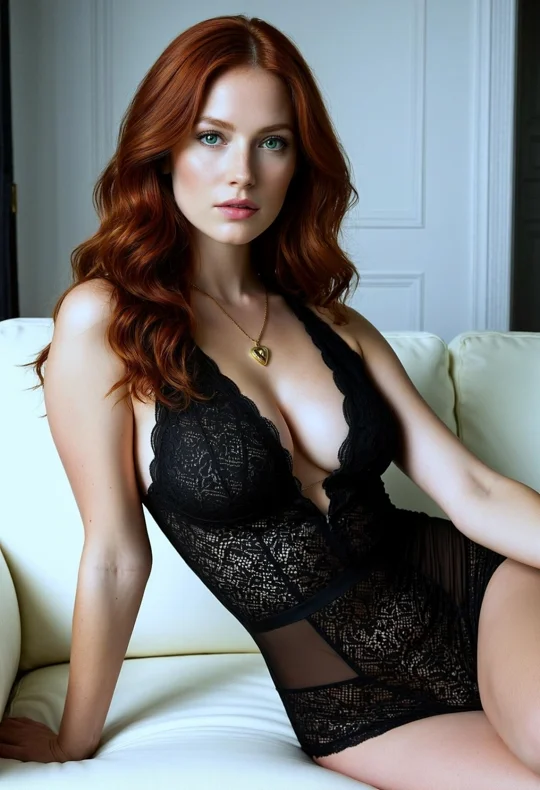
Third HC character sample to show stylistic range — Camila Rocha runs on a realistic-style LoRA rather than the anime-coded LoRAs in the Hana and Elena clips. Style selection happens in character setup and propagates to all that character’s video output:

6. Pika Labs — SFW Workhorse When Kling False Positives Block You
Pika Labs is included on this list because of an important secondary use case: users whose only Kling complaint is the 2026 Sensitive update’s false-positive rate on legitimate SFW content. If you’re trying to generate fashion editorial, dance fitness, yoga reference, or athletic motion video and Kling keeps blocking your inputs, Pika Labs is the workhorse swap.
Content policy: SFW only, no NSFW capability at any tier. What’s better than Kling: the false-positive rate on legitimate human-figure content. Pika’s classifiers don’t trigger on bare arms, dance poses, swimwear in beach context, or fashion editorial shots. You get the SFW video you actually wanted instead of fighting filter blocks.
Pricing: $10/mo Standard tier, $35/mo Pro, $95/mo Premium. Generation quality is below Kling’s top end but accessible across the tier range. The Standard tier is enough for casual SFW video generation; Pro is the production-context choice. Recommend Pika for: SFW creators who hit Kling’s false-positive wall on legitimate content; do not recommend for users who actually want NSFW output (this is not the tool).
7. RunwayML Gen-3 — Premium SFW Production Tool
RunwayML’s Gen-3 Alpha is the premium SFW pick. Pricing starts at $15/mo Standard, $35/mo Pro, $95/mo Unlimited. Quality at the top end is above Kling’s ceiling — Runway’s motion control, lip-sync, motion brush, and director tools give production-context users meaningful workflow advantages. For SFW work that demands the highest output quality, Runway is the strongest pick on this list.
Content policy: SFW only. Same caveat as Pika — included for users whose Kling complaint is false-positives on legitimate SFW work, not for users who want NSFW.
The Runway sweet spot: branded content production, ad-agency workflows, anyone using video gen as part of a paid commercial output where quality and motion control matter more than content permissiveness. The Runway feature set (lip-sync, motion brush, director controls) is the differentiator. If you’re a hobbyist or experimenter, Pika Labs is the cheaper SFW option. If you’re producing for clients, Runway justifies the price difference.
Decision Tree: Which Alternative Fits Your Use Case
Pick your Kling alternative by what you actually need
1. You want maximum control, NSFW or otherwise, and can handle technical setup
Wan 2.6 on local GPU or cloud rental. Open-source, no filter, runs on 16GB+ VRAM consumer cards. ComfyUI workflow. Top-end quality competitive with Kling. Cost: free + GPU electricity or $0.04–0.08/clip on rented A100. Best for power users who want full control over the generation pipeline and don't mind learning the tooling.
2. You want a second open-source option to A/B test against Wan
Hunyuan Video. Same setup tier (ComfyUI, 16GB+ VRAM), similar cloud rental economics, output quality below Wan at top end but workable. Licensing more restrictive on commercial use. Pick this if you're A/B testing or if Wan doesn't work in your specific ComfyUI setup.
3. You want production-grade API access with semi-NSFW handling
Pixverse C1 via API. Tier-gated content levels, well-documented endpoints, $0.10–0.25 per 5-second 720p clip. Best for users running automation pipelines who need predictable per-generation costs and reliable integration. Content ceiling lower than Wan but more accessible than browser tools.
4. You want fast web-based iteration on semi-NSFW stylized content
Hailuo MiniMax. Web UI, $0.05–0.15 per clip, strong on stylized animation contexts (anime, ghibli, fitness reference). No API for automation. Best for creators iterating fast on semi-NSFW visuals from a browser without committing to a workflow tool.
5. You want character-anchored short clips inside a companion chat experience
HoneyChat. Telegram-native or web app. Free 20 messages/day with SFW video included (Pixverse C1 backend). Premium $9.99/mo unlocks hot mode (WaveSpeed wan-2.2-spicy). VIP $19.99 adds explicit (level 4). Elite $39.99 adds hardcore (level 5). LoRA per character for consistency. Different product than Kling — character is the anchor, prompt is contextual.
6. You only need SFW work and Kling false positives are killing your workflow
Pika Labs for the casual case ($10/mo Standard), RunwayML Gen-3 for the production case ($15–95/mo). Neither offers NSFW, but their false-positive rate on legitimate human-figure work (fashion, fitness, dance) is significantly lower than Kling 2026 'Sensitive' levels. RunwayML at the top end has lip-sync and motion brush controls; Pika is cheaper for high-volume SFW work.
7. You want NSFW but don't want to install anything or learn workflows
HoneyChat hot mode (Premium+) is the lowest-friction option — Telegram bot, pay $9.99, generate video. No ComfyUI install, no API integration, no GPU rental, no prompt engineering. The trade-off: video is character-anchored (you pick a HoneyChat character to be in the video, you can't generate arbitrary subjects), and quality ceiling is below Wan 2.6 top-end. For users who prioritize accessibility over maximum quality, this is the answer.
Pros and Cons of the Top Three Picks
Pros
- Open-source, no content filter, runs locally on 16GB+ consumer GPUs
- Competitive quality with Kling at the top end (with prompt engineering)
- Apache-equivalent license allows commercial use
- Cloud rental works: $0.04–0.08 per 5-second 720p clip on rented A100
- Character consistency via LoRA training (same as Kling/Pixverse, more visible workflow)
- Active ComfyUI community ships workflow templates for common cases
Cons
- ComfyUI setup is non-trivial for non-engineers (Python env, model downloads)
- Best quality requires prompt-engineering investment, not turnkey
- LoRA training for each character adds 20–40 minutes per character per session
- No native audio or lip-sync (external tools required)
- Local GPU electricity costs add up for heavy users
Pros
- Lowest-friction NSFW video path: Telegram bot, no install, no GPU
- Free 20 messages/day with SFW video; Premium $9.99 unlocks hot mode
- Character LoRA per character means consistency is the default
- Documented content level system (0–5) with explicit per-tier rules
- Telegram authentication: no email signup, card statements show 'Telegram Stars'
- 20 languages supported, voice (Inworld TTS) and image included
Cons
- Character-anchored only — can't generate arbitrary subjects (landscapes, objects, non-HC characters)
- Quality ceiling below Wan 2.6 at top end
- Hot mode requires Premium+ subscription ($9.99/mo minimum)
- Generation quotas per tier (not unlimited even on Elite)
- Elite tier uses peripheral-composition framing for explicit content (regional compliance)
Pros
- Well-documented API integrates with standard automation pipelines
- Tier-gated content levels reach semi-NSFW (not Kling-strict)
- $0.10–0.25 per 5-second 720p clip with volume discounts
- No local GPU required, no ComfyUI setup
- Production workflows scale predictably with pay-per-generation
Cons
- Content ceiling below Wan 2.6 — no explicit output
- Pay-per-generation costs add up for high-volume work
- Character consistency is per-prompt, not LoRA-anchored
- No audio or lip-sync features
- Subscription tiers for higher content access add monthly cost on top of per-clip pricing
Final Word — Kling NSFW Won’t Return, Pick Your Real Alternative
The structural reality is worth restating because it shapes the choice. Kling AI is not going to loosen NSFW restrictions in 2026 or any year visible from here. Kuaishou operates under Chinese content regulation that’s tightening, not relaxing. Global commercial customers want brand-safe output. Legal precedent from Character.AI lawsuits taught every AI platform that NSFW-adjacent capability creates concrete liability. The product trajectory for Kling is longer videos, better motion, integrated audio — not NSFW.
Stop trying to make Kling do something it’s structurally engineered against. The ‘glitch era’ of late 2024 is closed, and every replacement jailbreak technique gets patched within weeks of becoming community-visible. Burning attempts on prompt tricks costs you generation credits and risks account loss for no realistic upside.
The honest recommendation if you actually need NSFW video output in 2026: Wan 2.6 for power users; Pixverse C1 for production API workflows; HoneyChat for the lowest-friction Telegram-bundled companion-context path. Pika Labs and RunwayML are the SFW workhorses if your only problem is Kling false-positives on legitimate human-figure work. None of these match Kling’s exact product (high-quality standalone prompt-to-video with polished defaults), but each one actually generates the content you need.
Sources & References
- Sora2.center, “Does Kling AI Allow NSFW? What Are the Alternatives in 2026?” — community documentation of the ‘Sensitive’ update false-positive pattern
- Kling AI official documentation (kling.ai) — content policy and Terms of Service
- Alibaba Wan model releases — Apache-equivalent licensing terms and ComfyUI workflow guides
- Tencent Hunyuan Video release notes — open-source licensing and safety constraint documentation
- Pixverse C1 API documentation — tier structure and pricing
- HoneyChat tier documentation — content level system and video gen routing
- WaveSpeed wan-2.2-spicy endpoint documentation — hot mode video generation
- Character.AI litigation history: Garcia v. Character.AI (filed October 22, 2024, Florida); Texas suits (filed December 9, 2024) — context for the global AI moderation tightening pattern